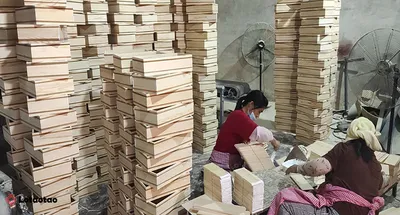
Lotaotao Logo
Sourcing

How to Customize a Wooden Box for Your Business: A Decision Guide

A decision guide for brand owners ordering custom wooden boxes for the first time: what to decide, in what order, what each option costs, and what to send the factory.

Custom wooden gift box with a sliding lid and laser engraved logo on a workbench

Start With What the Box Has to Do

The first question is not what the box looks like. It is what the box has to survive.

Four jobs cover most orders. Protect: the box holds a fragile object through parcel handling, so the walls, interior, and outer carton share the load. Present: the box sits on a retail shelf or opens on a table, so the lid, lining, and finish carry the brand. Store: the box lives in a cupboard for years, so the hinge and the lid fit matter more than the print. Ship: the box goes through e-commerce, so the corners need 3 mm walls and the carton needs a drop rating.

A subscription box that ships in a mailer is a different product from a wine box that a customer keeps. The first needs 8–10 mm paulownia walls, a sliding lid, and a die-cut foam insert. The second needs 12–15 mm walls, a hinged lid, and a six-bottle divider. Same factory, different drawing.

Write one paragraph in plain language before any dimensions: what goes in the box, who opens it, where it is opened, and what happens to the box afterwards. That paragraph decides half the cost. If the box is thrown away after unboxing, spend on print and save on joinery. If it sits on a dresser for ten years, spend on the hinge and the lining, and keep the print simple.

Dimensions: Product Size Plus Clearance

Build the inside first. The exterior follows.

Internal dimension equals product dimension plus clearance. Clearance covers the lining, the foam, the fingers that lift the product out, and the movement of the wood after it leaves the factory.

ConfigurationAllowance per sideExample
Unlined rigid box1.5–2 mm200 mm product gives 203–204 mm internal
Fabric lining over 2 mm foam4–5 mm200 mm gives 208–210 mm
Die-cut EVA foam5–10 mm200 mm gives 210–220 mm
Sliding lid groove0.3 mm6 mm lid in a 6.6 mm groove
Hinged lid reveal0.5–1.0 mm300 mm box, 299 mm lid

Wall thickness follows the span. A 300 mm box runs 10–12 mm walls; a 400–500 mm box runs 15 mm; anything over 500 mm runs 18 mm or a frame-and-panel construction. Thin walls on a long span bow when the lid closes, and the gap shows at the corners.

Wood moves. A 300 mm panel changes about 1 mm between 8% and 12% moisture content, the range between a workshop in Guangdong and a house in Arizona. Design the lid with 0.5–1.0 mm of clearance, not zero. A lid fitted tight in the factory will not open in February.

Tolerances: ±0.5 mm on panel size, ±1.0 mm on exterior dimensions, ±0.3 mm on the lid-to-body gap. Put those numbers on the drawing. A factory that is not told will work to its own default, and the default is wider than most brands expect.

Material: Budget and Destination Market

Material is 40–70% of the cost of a wooden box, so the choice is mostly a budget decision with a compliance layer on top.

SpeciesDensityRelative costWhere it fits
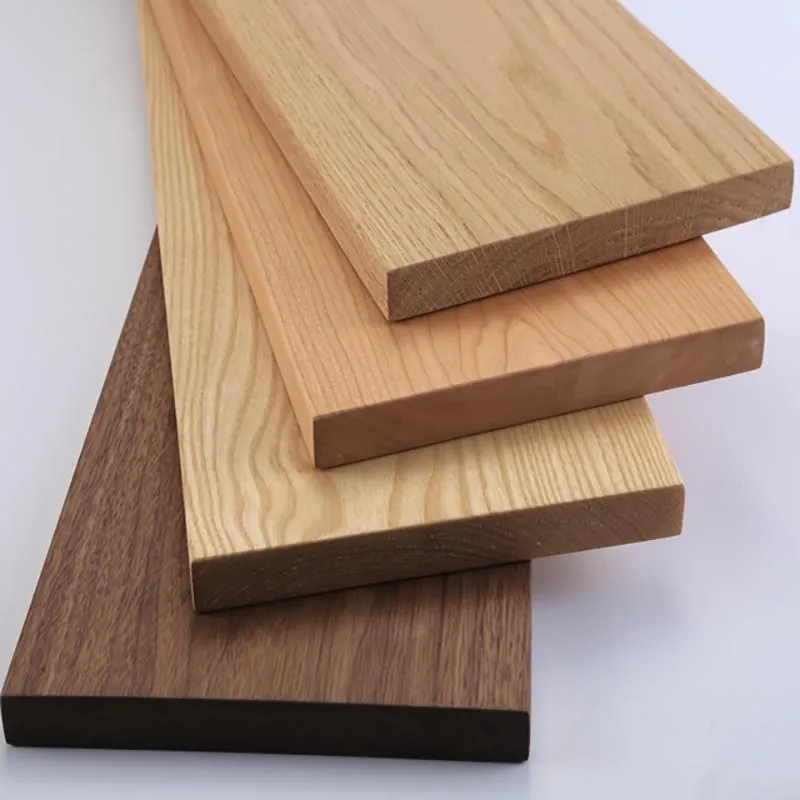
Paulownia280–350 kg/m³LowWine and gift boxes, light shipping; dents easily
Pine400–500 kg/m³LowPainted or stained boxes, utility packaging; knots
Rubberwood560–640 kg/m³Low to mediumUniform grain, takes lacquer and paint, good at volume
Poplar plywood450–550 kg/m³LowStable panels, painted boxes, needs edge banding
Birch plywood650–720 kg/m³MediumFlat lids, clean edges, veneer or paint
MDF670–820 kg/m³LowPaint-grade boxes, heavy, seal every face
Red oak700 kg/m³Medium to highVisible grain, hard-wearing, $4.50–5.50/bf FAS
Black walnut610 kg/m³HighDark grain, gift and jewelry, $10–18/bf FAS

Destination decides the moisture content and the compliance file, not the look. Dry to 6–10% for the US indoor market, 8–12% for northern Europe, 12–16% for Southeast Asia. Composite panels going to the US need CARB TSCA Title VI documentation; the EU wants FSC or EUDR evidence for the timber and a REACH statement for the finish.

A paulownia box built at 10% and shipped to a dry market loses 2–3 mm across a 300 mm lid. That is enough to turn a tight lid loose. Pine and rubberwood move more; plywood moves less across the width because the cross-grain layers restrain it. The wood materials guide has the shrinkage tables by species.

Joinery and Lid Type

Joinery sets the price and the corner the customer sees first.

Four joints that cover the range

  • Finger joint (box joint). CNC-cut interlocking fingers, glue only. Strong, visible, and cheap at volume. The joint becomes part of the design, so use it on pine and plywood boxes where the corner pattern suits the brand.
  • Dovetail. The strongest corner in the range, with 1.5–2× the tensile strength of a standard tenon. It needs a skilled operator or a CNC dovetailer, adds 8–15% to the box cost, and reads as craft.
  • Mitre with a spline. A clean outside corner with a hidden spline for strength. It needs a clamping jig and a precise 45° cut; gaps show on a dark finish.
  • Rabbet, glue, and pin nails. The cheapest corner. It works on painted utility boxes and fails on a box that is dropped. Do not use it on a gift box.

Glue is PVAc D3 for general use and D4 for humid markets. Spread 180–220 g/m², clamp at 0.8–1.2 MPa for 45–90 minutes, and leave the box 24–48 hours before sanding or machining. Rushing the cure shows up as a sunken glue line three weeks later.

Lid type

The lid is the second cost decision. A sliding lid needs a groove, a finger pull, and no hardware: the cheapest option and the easiest to ship. A hinged lid needs two butt hinges for a lid up to 5 kg (50 × 30 mm), a piano hinge above 400 mm, and a lid stay above 300 mm. A lift-off lid needs a lip and a friction fit, with no hardware at all. A drawer front needs runners at $0.80–2.50 a pair and 15 mm of extra width per side.

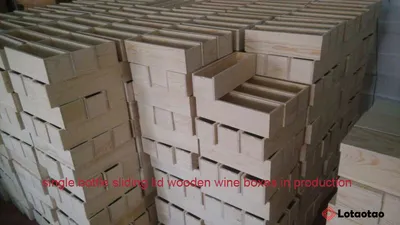
Sliding lids are the standard for sliding lid wooden gift boxes because the lid protects the product and the box packs flat. Hinged lids sell better in retail because the customer opens the box without lifting a panel off. Pick by how the box is opened, not by how it looks in a catalogue photo.

Interior Fit-Out

Interior fit-out is where a $3 box becomes a $9 box, and where most samples fail.

Die-cut EVA foam at 60–90 kg/m³ holds a product through a drop test and looks tidy. The cutting die costs $150–400 per cavity and takes 5–8 days. At 50 pieces, the die costs more than the foam; at 500, it adds $0.30–0.80 per box. Molded pulp is the recyclable option: tooling $800–3,000, MOQ 3,000–5,000, and 15–20 days of lead time. It suits a brand with a sustainability claim and a volume plan.

Fabric lining is labour, not material. Velvet or suede over 2 mm foam is cut and glued by hand, adding 8–15 minutes and $0.80–2.00 per box. Use a water-based adhesive, applied thin, or the fabric telegraphs glue marks through the pile. The box lining guide covers foam grades, adhesive choice, and the corner folds that separate a clean lining from a lumpy one.

Dividers: 3–5 mm plywood or 2 mm MDF wrapped in paper or fabric, slotted together without glue. A six-bottle wine divider adds $1.20–2.50 and 10 minutes. A 3 × 2 compartment grid in 3 mm ply uses the same slots and adds $0.90–1.80, which keeps small parts from sliding into each other. A removable tray in 3–5 mm ply with a ribbon pull adds $0.60–1.50 and gives a second layer without doubling the box height. At 500 pieces, routed foam is cheaper than fabric-covered dividers and holds the product better.

Branding: Cost and Setup Time by Method

Branding is the line item buyers underestimate. The method matters less than the setup fee divided by the order quantity.

MethodSetupUnit at 500Unit at 50Limits
Laser engraving$0–50 program$0.30–0.80$0.60–1.20One tone, flat or gently curved
Hot foil (brand iron)$80–200 die$0.15–0.35$0.60–1.00One colour, flat surface
Screen print$60–150 per colour$0.10–0.25$0.80–1.501–3 colours, flat panel
Foil stamping$100–300 die$0.20–0.45$0.70–1.40Metallic, one colour
UV print$0–80$0.35–0.90$0.50–1.00Full colour, slower per unit
Printed label$0–80$0.05–0.15$0.10–0.25Lowest durability

Read the table by column. At 50 units, laser engraving and a printed label are the only options that do not carry a painful setup. At 500, hot foil and screen print win on unit cost. At 5,000, pad printing and heat transfer drop below all of them.

Laser engraving burns a mark 0.2–0.5 mm deep. It works on pine, plywood, walnut, and bamboo, and it does not need a flat panel. Hot foil needs a flat surface and a die, so it suits a lid top but not a curved side. Screen print needs a flat panel and one screen per colour; two colours double the setup. UV print gives full colour with no plate, which makes it the right choice for a 200-piece launch with a photograph on the lid, but the ink sits on the surface and scratches.

A printed label is not a shortcut to avoid. It is the correct answer for a 50-piece test run: cheap, fast, replaceable. Move to direct printing when the volume holds. Our logo branding options page lists the artwork requirements for each method.

Artwork: vector files, Pantone references, 2–3 days for a proof. Engraving on the lid interior is free branding that nobody sees; engraving the lid top is the one the customer photographs.

Finish, Quantity, and MOQ Logic

Finish is the last visual decision and the first one a customer touches.

Water-based lacquer (VOC 50–100 g/L) leaves a clear film at HB–1H hardness and suits a box shipping to a market with VOC rules. Hard wax oil (below 50 g/L) keeps an open grain that feels like wood and needs re-oiling. Solvent polyurethane (400–600 g/L) gives a harder, fuller film and a stronger smell; for a box opened at a wedding, that smell is a problem. Nitrocellulose is cheaper and faster but restricted in several markets.

Sand to P120, P180, then P240 before stain; P280–P320 before the topcoat. A stain adds $0.20–0.50 and a day. A two-colour finish, painted exterior with a natural interior, adds 15–20 minutes and $0.40–0.90. The surface finishing guide compares the systems by VOC level and use.

Quantity drives unit price through setup, not material. Print screens, dies, CNC programs, and foam cutting dies are one-time costs. A $200 die spread over 50 boxes is $4 a box before the box is made. Spread over 1,000, it is $0.20. That is why a 50-piece run costs 40–60% more per unit than a 500-piece run of the same box.

MOQ by configuration: 200–500 for a standard size and finish, 500 for a custom size or lining, 1,000 for a custom hardware profile or a printed carton, and 3,000–5,000 for molded pulp. A mixed order across three SKUs at 200 each meets a 500-piece minimum and fills a carton more efficiently than one SKU at 500.

What to Send the Factory, and the Timeline

Send these eight items in the first email. A factory can quote in 1–3 days with them, and cannot quote properly without them.

  • A drawing or a reference photo with the dimensions you care about marked.
  • Product dimensions and weight, including the lid or cap.
  • Quantity per SKU and total.
  • Destination country and postcode.
  • Target FOB or DDP price, and the currency.
  • The date the box has to be in your hands.
  • A finish reference: Pantone, a physical chip, or a photo.
  • Branding artwork and the packaging requirement (retail-ready, e-commerce, pallet).

Add compliance documents when the destination needs them: FSC, CARB, REACH, or a food-contact statement. A factory that asks for these early is doing you a favour; a factory that ignores them will cost you a container.

Timeline for a first order:

  • Quote: 1–3 days.
  • Sample: 7–15 working days for a simple or medium box, plus 3–5 days courier.
  • Sample revision: 5–10 days.
  • Production: 25–35 days after deposit and artwork approval.
  • Inspection and packing: 2–3 days.
  • Sea freight: 25–35 days to the US West Coast, 30–40 days to northern Europe.

Add it up: 10–14 weeks from first message to boxes in a warehouse. A buyer who needs stock in six weeks is buying air freight or a stock size, not a custom box. Plan the launch date backwards from the freight, not forwards from the sample.

The custom order process walks through the same steps with the documents we need at each one. If this is a first order and the specification is still open, send the product and the deadline first. We will come back with two or three constructions at different price points rather than one number you cannot compare. The custom wooden boxes range shows the standard constructions those options start from.

Frequently Asked Questions

How much does it cost to customize a wooden box?+

At 500 pieces, a lined 300 mm box runs roughly $3–9 FOB depending on species, joinery, and interior. Setup fees add $80–400 once: a print screen, a foil die, a foam cutting die, or a CNC program. Material is 40–70% of the unit cost. A 50-piece run of the same box costs 40–60% more per unit because the setup is spread over fewer pieces.

What is the minimum order for a custom wooden box?+

Standard sizes and finishes start at 200–500 pieces. A custom size, lining, or lid starts at 500. A custom hardware profile or printed carton starts at 1,000. Molded pulp inserts need 3,000–5,000. Mixed orders are welcome and cut the cost of reaching a minimum: three SKUs at 200 pieces each satisfy a 500-piece floor.

How long does a custom wooden box order take?+

Plan 10–14 weeks from first message to warehouse. A quote takes 1–3 days, a sample 7–15 working days plus courier, production 25–35 days, and sea freight 25–35 days to the US West Coast. Sample revisions add 5–10 days. Air freight shortens the transit but rarely the production schedule, and it doubles the landed cost on a full carton.

Which branding method is cheapest at 500 units?+

Hot foil and screen print are the cheapest per unit at 500, at roughly $0.10–0.35 depending on colours and coverage. Laser engraving costs $0.30–0.80 and needs no die, which makes it the better choice below 200 units. A printed label is cheapest at 50 but wears off. Match the method to the quantity, not to a sample photo.

Can I order a sample before committing to production?+

Yes. A sample takes 7–15 working days and costs $80–300 depending on complexity, with the fee credited against an order of 1,000 pieces or more. The sample is made on the same CNC and with the same finish as production, and it becomes the sealed reference for inspection. Keep one signed sample at the factory and one at your office.

What information does a factory need to quote a wooden box?+

A drawing or reference photo, product dimensions and weight, quantity per SKU, destination country, target price, in-hand date, a finish reference, and branding artwork. Compliance requirements (FSC, CARB, REACH) belong in the first email too. With those, a quote takes 1–3 days. Without dimensions or quantity, any number is a guess.

Related Pages

Need This Made to Your Spec?

We manufacture custom wooden boxes, crates, trays, and pet furniture in our own factory in China. Send your drawings or samples for a quote.

Request a Quote →