Lotaotao Logo
Sourcing

Custom Wooden Crates: A Buying Guide for B2B Importers

Crates for export packaging, retail display, and home storage share a shape but not a spec. This guide covers the materials, compliance rules, and cost drivers that decide whether a crate order works.

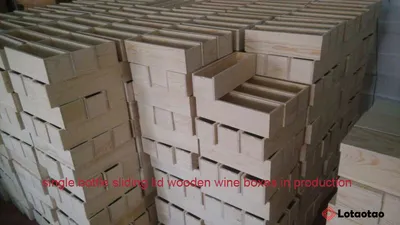
Wooden storage crates with cut-out handles stacked in the workshop

Three Markets, Three Different Crates

Wooden crates serve three distinct markets: export packaging for industrial goods, retail display and storage for brands, and decorative crates for gifting and home organization. Each market has different requirements for materials, construction, and compliance. For B2B buyers unfamiliar with the category, the range of options can look similar on the surface but differ significantly in cost, durability, and regulatory requirements.

This guide breaks down what buyers should know before sourcing custom wooden crates — covering materials, construction types, ISPM-15 compliance, customization, and supplier evaluation.

Key Takeaways

  • Export wooden crates must comply with ISPM-15 (heat treatment + IPPC stamp) — non-compliant shipments risk customs rejection at destination
  • Pine is the most widely used material for standard crates; plywood is the go-to for export packaging because it is exempt from ISPM-15 treatment
  • Customization costs scale with four factors: material grade, joinery method, finish type, and order volume
  • Production lead time runs 7–15 days for custom orders after design confirmation
  • MOQs start at 200 units for custom crate orders, scaled by volume
Types of Wooden Crates and Their Applications

Not all wooden crates are built the same way. Construction method, material, and intended use determine which type fits a given application.

Standard Slat Crates

Slat crates use spaced wooden slats fixed to a frame, leaving gaps between boards. This open design keeps weight down while providing structural rigidity. Common applications include fruit and vegetable transport, retail display fixtures, and general storage.

The gap between slats also provides natural ventilation — useful for produce and any goods that benefit from airflow during transit.

Solid-Panel Export Crates

Export crates use solid plywood or OSB panels rather than spaced slats. The closed construction protects contents from moisture, dust, and handling damage during shipping. These are the standard choice for international freight.

Plywood construction provides a key advantage: no ISPM-15 fumigation required. Because plywood is an engineered wood product made from heat-bonded veneers, it falls outside the solid-wood quarantine rules that apply to natural timber.

Decorative and Display Crates

Decorative crates prioritize appearance. They use higher-grade wood with cleaner surfaces, finished with stain, paint, or a distressed look. Retail brands use them for in-store product displays, subscription box packaging, and gift presentation.

Common finishes include:

  • Natural clear coat (shows wood grain)
  • Whitewash or gray wash (farmhouse aesthetic)
  • Dark stain (rustic or vintage look)
  • Painted colors (matching brand palettes)
  • Burned/charred surface (Shou Sugi Ban inspired)

Heavy-Duty Industrial Crates

Built for machinery, equipment, and loads exceeding 100 kg. These crates use thicker panels, steel reinforcement, and reinforced bases designed for forklift handling. Some designs are collapsible or foldable for return logistics in closed-loop supply chains.

Nesting and Stackable Crates

Designed to nest inside each other when empty, reducing return shipping and storage volume. Popular in retail logistics where crates circulate between distribution centers and stores. Laser-cut nesting crates serve a different market — decorative storage for home and office.

Crate Type Best For Typical Material MOQ Range Price Range (USD)
Standard Slat Crate Retail display, produce, storage Pine, poplar 200–500 pcs $3–$15
Solid-Panel Export International freight Plywood, OSB 200–500 pcs $10–$80
Decorative/Display Retail, gifts, home decor Pine, paulownia 200–500 pcs $4–$30
Heavy-Duty Industrial Machinery, equipment Plywood + steel 200–500 pcs $50–$300+
Nesting/Stackable Closed-loop logistics Pine, plywood 200–500 pcs $5–$25

Materials Used in Wooden Crate Manufacturing

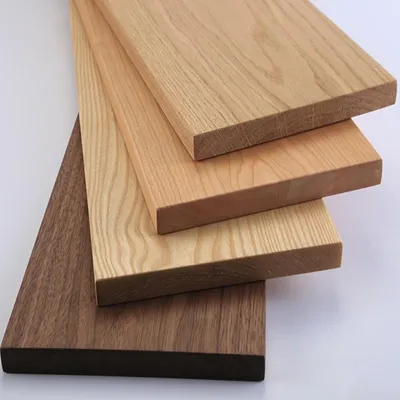
We work with four main materials for custom crates — pine, paulownia, bamboo, and birch plywood — each selected for weight, hardness, grain, and cost per unit. The choice of wood directly affects crate weight, strength, appearance, and whether ISPM-15 treatment is required.

Pine

The most common material for wooden crates. Pine is relatively lightweight, easy to machine, and accepts stains, paints, and clear coats well. It has a visible grain that works for both rustic and clean-finished looks. Most retail and decorative crates use pine.

Cost: Lowest among solid wood options. Dry pine boards cost roughly $400–$600 per cubic meter at wholesale.

ISPM-15: Solid pine requires heat treatment or fumigation for international shipping. This adds approximately $1–$3 per crate depending on volume.

Plywood

The standard for export crates. Plywood's cross-laminated construction resists warping and splitting better than solid wood. Available in multiple thickness grades (6mm, 9mm, 12mm, 15mm, 18mm). Birch plywood offers the smoothest surface for printed branding.

ISPM-15: Exempt. Plywood is classified as a processed wood product and does not require fumigation or heat treatment.

Paulownia

A lightweight hardwood with a clean, smooth surface. Paulownia weighs about 40% less than pine, making it suitable for crates where shipping weight is a primary concern. It's softer than pine, so it's less suited for heavy loads but works well for decorative and display crates.

Bamboo

Bamboo crates offer a distinct look — clean, light-colored, with a fine linear grain. Bamboo is technically a grass, not wood, which makes it exempt from ISPM-15 requirements. It has a density comparable to birch (600–700 kg/m³) and holds up to moisture better than pine. Frequently chosen for retail display crates where a modern, eco-conscious appearance matters.

Poplar and Birch

Poplar provides a smooth, knot-free surface ideal for painted finishes. Solid birch offers a fine, even grain for natural-finish retail crates. Both are available as options beyond the four main materials listed above.

OSB (Oriented Strand Board)

An engineered panel used for heavy-duty industrial crates. Lower cost than plywood but rougher surface. Suitable for one-way export packaging where appearance is not a factor.

ISPM-15 Compliance: What Buyers Need to Know

ISPM-15 is the international standard for wood packaging used in cross-border trade. It's published by the IPPC (International Plant Protection Convention) and enforced by national customs authorities.

The Core Requirement

All solid wood packaging material thicker than 6mm must be treated and stamped with the IPPC mark before international shipment. This applies to crates, pallets, dunnage, and packing blocks.

Two treatment methods are accepted:

  • Heat Treatment (HT): Wood core temperature reaches 56°C for at least 30 minutes. The most common method.
  • Methyl Bromide Fumigation (MB): Chemical fumigation. Less common; being phased out in many jurisdictions due to environmental concerns.

The IPPC Mark

A compliant crate carries a stamp showing:

  • The IPPC symbol
  • Country code (e.g., CN for China)
  • Producer/treatment provider registration number
  • Treatment method code (HT or MB)

Without this stamp, customs at the destination port can hold, re-export, or destroy the shipment — at the importer's expense.

Exempt Materials

Not all wood packaging requires treatment. Materials exempt from ISPM-15 include:

  • Plywood and other engineered wood panels
  • Wood thinner than 6mm
  • Processed wood products (particle board, MDF, OSB)
  • Wood that has been chemically pressure-treated

For many B2B buyers shipping from China, choosing plywood export crates eliminates ISPM-15 compliance from the checklist entirely. This is why plywood dominates the export crate market. For more on wood material selection, see our guide to wood packaging materials.

Country-Specific Rules

While ISPM-15 is the global baseline, some countries enforce additional requirements:

Market Additional Requirements
EU (EUDR) Due diligence statement on wood origin; deforestation-free certification may apply
USA Lacey Act declaration; USDA APHIS enforcement of ISPM-15
Australia/New Zealand Strictest enforcement globally; mandatory treatment + inspection on arrival
China (imports) ISPM-15 required; additional phytosanitary certificate for some species

Work with a manufacturer experienced in export packaging who can provide ISPM-15 documentation as part of the standard shipping process.

Customization Options for Wooden Crates

Custom crates go beyond standard dimensions. The main customization levers include:

Dimensions and Structure

Custom sizing is the most common request. Standard crates come in fixed dimensions; custom crates are built to the buyer's specifications. This matters for:

  • Products with non-standard shapes or sizes
  • Optimizing container space utilization (every cubic meter counts in FCL shipping)
  • Matching existing shelving or display systems

Structural options include hinged lids, sliding lids, removable lids, and open-top designs. Some crates include internal dividers, foam inserts, or fabric liners.

Branding and Marking

For retail-facing crates, custom branding options include:

  • Laser engraving: Logo, text, patterns. Fine detail, permanent. Works best on lighter woods.
  • Silk-screen printing: Single or multi-color logos. Cost-effective for larger runs.
  • Hot stamping / foil stamp: Metallic foil branding. Adds a premium look.
  • Branding iron: Heated metal die pressed into wood. Creates a debossed, darkened mark. Permanent, no consumables.
  • Custom color painting: Pantone-matched finishes to match brand colors.

Industrial export crates use stenciled markings for handling instructions, contents identification, and IPPC stamps.

Joinery Methods

The way boards connect affects both durability and cost. We use three construction methods for crates:

Method Durability Relative Cost Best For
Nailed butt joints Standard Baseline Display and lightweight crates
Box joints Medium +10–20% Medium-duty and retail crates
Dovetail joints High +30–50% Heavy-duty load-bearing crates

Finish and Treatment

Beyond structural choices, surface treatment shapes the final product:

  • Natural/sanded only: Lowest cost. Shows raw wood. Common for export crates.
  • Clear lacquer: Protects wood while showing grain. Moderate cost.
  • Stained: Darkens wood, highlights grain. Multiple color options.
  • Painted: Full color coverage. Highest customization potential.
  • Whitewashed: Light, semi-transparent finish that highlights wood grain while giving a lighter, rustic look.
  • Distressed/burned: Decorative effect using flame or wire brushing. Labor-intensive; higher cost.

How to Evaluate Wooden Crate Suppliers

When comparing manufacturers, look beyond the unit price. Three areas matter most for crate sourcing.

Compliance Verification

For export crates, verify ISPM-15 capability upfront. Ask for:

  • The supplier's IPPC registration number
  • Photos of their HT stamp on recent production
  • A sample crate with visible IPPC mark

Suppliers without verifiable ISPM-15 documentation create customs risk that outweighs any unit price savings.

Production Capacity

Crate manufacturing runs on different timelines than other wood products. Key questions:

  • What's the daily output for your crate type and size?
  • What's the standard lead time for a new custom order (7–15 days)?
  • Can they handle seasonal volume spikes?

A factory producing 5,000 decorative crates per month may not be set up for 50 heavy-duty export crates. Ask about their primary market — decorative vs. industrial — to confirm fit.

Sampling and Quality

Request a physical sample before committing to bulk. Sample costs range from $20–$100 for standard crates and $50–$200 for complex custom designs. Express shipping takes 5–10 days. The sample should match the production spec exactly — same material, same joinery, same finish.

For detailed guidance on supplier comparison, read our post on how to compare custom wood products suppliers.

Common Mistakes When Ordering Custom Crates

  1. Specifying dimensions without accounting for pallet or container fit. A crate that's 2 cm too wide for standard pallet dimensions wastes container space and adds cost. Always design around standard pallet sizes (1200×1000mm for Europe, 1219×1016mm for North America).

  2. Overlooking moisture content. Wood with moisture content above 18% can warp, crack, or develop mold in transit. Specify 8–12% moisture content for export crates.

  3. Choosing solid wood for export without ISPM-15 planning. Solid pine crates look great but need treatment before international shipping. If export compliance is required and you don't want the treatment overhead, use plywood.

  4. Not testing with a small order first. Even with samples, a 10-unit trial order reveals production consistency issues that a single sample cannot. Scale gradually.

Next Steps for Buyers

Sourcing custom wooden crates comes down to matching crate type to application, verifying compliance for export shipments, and working with a manufacturer who understands your market.

If you're planning a crate order — whether decorative crates for retail, sturdy crates for home and storage organization, or ISPM-15-compliant crates for export — having clear specs on dimensions, material, finish, and quantity speeds up the quoting process. At Lotaotao Crafts, we produce custom wooden crates across multiple styles and finishes. Contact us with your requirements for a quote, or visit our custom wooden boxes page to explore related packaging options.

Frequently Asked Questions

How long does it take to produce and ship custom crates from China?+

Production lead time: 7–15 days for new custom orders after design confirmation. Shipping time varies by destination and method — your account manager provides a specific timeline based on your location and order volume. Air freight is available for urgent orders but costs significantly more than sea freight.

Do all wooden crates need fumigation for export?+

No. Only solid wood crates require ISPM-15 treatment. Plywood, MDF, OSB, and other engineered wood products are exempt. If you're shipping internationally and want to avoid fumigation, specify plywood construction.

Can I get custom sizes and branding?+

Yes. Custom dimensions are standard practice. Branding options include laser engraving, screen printing, hot stamping, and custom color painting. Setup costs for branding (engraving template, screen stencil, etc.) run $30–$100 one-time, amortized across the order volume.

What's the price difference between pine and plywood crates?+

For standard slat crates, pine runs 20–30% less expensive than birch plywood of equivalent dimensions. Once ISPM-15 treatment costs are added for solid wood export crates, the gap narrows. For export applications, plywood is the more cost-effective choice when compliance costs are factored in.

How do I ensure my crates will pass customs inspection?+

Three steps: use a manufacturer with verified ISPM-15 compliance, confirm the IPPC stamp is visible on every crate, and keep treatment certificates on file. For EU-bound shipments, also have your wood origin documentation ready for EUDR compliance checks.

Related Pages

Need This Made to Your Spec?

We manufacture custom wooden boxes, crates, trays, and pet furniture in our own factory in China. Send your drawings or samples for a quote.

Request a Quote →