
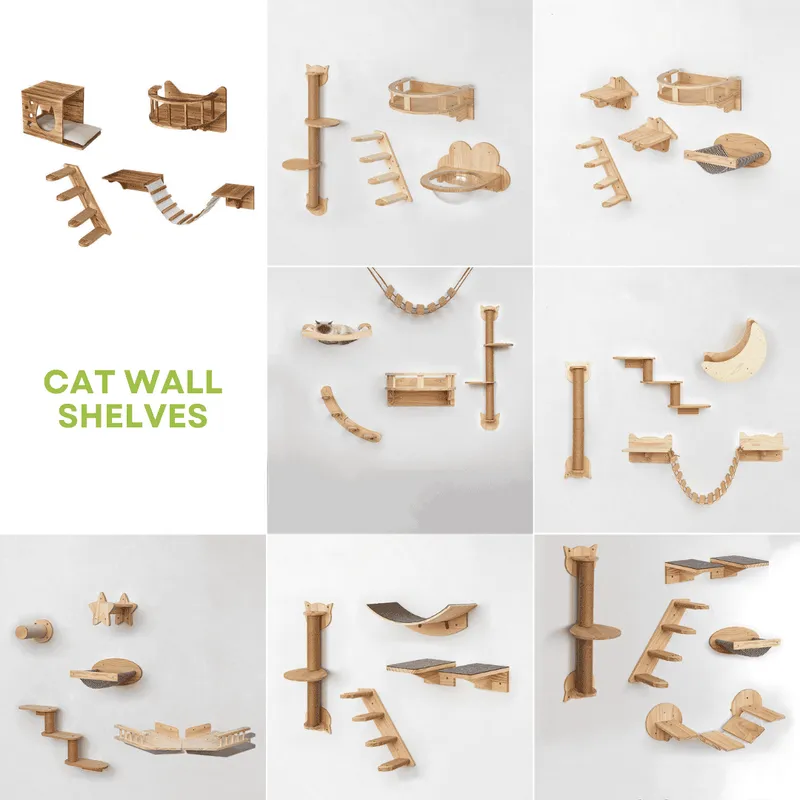
A cat does not climb a wall system the way a person uses a ladder. It launches, lands, looks around, then picks the next target. Every design decision follows from that sequence.
Three measurements control whether a system works. Platform depth decides whether the cat can land and turn. A 250–300 mm (10–12 in) depth fits most adults; a Maine Coon or a large domestic needs 350 mm (14 in). Vertical rise decides whether the jump is comfortable. Healthy adults clear 300–350 mm (12–14 in) between platforms all day; kittens and cats over ten years do better at 200–250 mm (8–10 in). Horizontal gap decides the trajectory. Keep it under 400 mm (16 in) when the cat has to turn in the air.
Sight lines matter as much as distance. A cat commits to a jump only when it can see the landing surface and the space above it. Offset two shelves by more than half a platform width and the cat stops using the upper one. Put the top platform at 1,500–1,800 mm (59–71 in), where the cat can watch a room without its head touching the ceiling.
Landing room is the figure most drawings miss. Leave one body length, 450–500 mm (18–20 in), of clear platform or wall beyond the landing point. A shelf that ends where the cat lands becomes a shelf the cat avoids.
If you are specifying a system for the first time, start from a proven modular cat wall shelf set and change dimensions from there. It costs less than drawing a new system from zero, and the jump distances have already been tested on real cats.